

On the intellectual dignity of believing we are in conversation with the world.
It's Not Woo If It's True(1): Synchronicity and Ontopoetics.

Does the world speak to us?
The easy answer is: of course it does. We hear birdsong as a blessing, leaves flutter as translators for the wind, and we sometimes feel embraced by the beauty of everything. Dar Williams puts it well in her song about recovery from depression, After All:
Well the sun rose with so many colours, it nearly broke my heart. It worked me over like a work of art. And I was part of all that.
The other easy answer is: of course not - are you crazy? The world is an objective phenomenon grounded in the laws of physics. Birds sing due to the adaptive pressures of evolution, wind acts as a force that can displace mass, and the sun is ultimately just a large ball of gas.
There is a more challenging answer I’d like to explore here, and it is important for Perspectiva’s philosophical commitment and strategic priorities over the next decade. I have come to believe the world really speaks to us, in an ongoing conversation, and not just through nature and the senses, but also through symbols, images, animals, and events; and regularly, sometimes unbidden, and sometimes in response to what we ask of it. I have noticed a new (for me) term that captures this idea - ‘ontopoetics’ - articulated most directly by the Australian deep ecologist Freya Matthews.
Ontopoetics rests on the premise that there exists an inner aspect of reality which is expressed via a communicativity that coexists with but does not over-ride physical causality. If physics is the study of the causal order, then ontopoetics may be defined as the study of the poetic order, of the meanings that structure the inner aspect of being. If ecology has in recent decades defined the first phase of the re-negotiation of our modern Western relation to reality, ontopoetics might be integral to the second phase.
I agree with that last line, which is from a 2007 paper. Ecological perception is the focus of a wonderful book, Plato’s Revenge by William Ophuls (2011) where he writes: “Ecology will have to be the master science and guiding metaphor for any future civilisation.” I used to agree with that, but I am even more taken with a statement by the American Sociologist Philip Slater (Earthwalk, 1975, p21):
All the errors and follies of magic, religion and mystical traditions are outweighed by the one great wisdom they contain – the awareness of humanity’s organic embeddedness in a complex natural system. And all the brilliant, sophisticated insights of Western rationalism are set at naught by the egregious delusion on which they rest- that of human autarchy.
With those two statements in mind, I see ecology as a necessary but not sufficient premise for reimagining our predicament. I believe in the more-than-human world, but I believe the most powerful aspects of it exist beyond prevailing ideas of nature, by which I mean, figuratively at least, that there might be angels in the acorns and fairies in the fungi. Epistemic humility should not be confused for epistemic conformity. I believe there is much more going on than our five permissible senses can grasp. Part of my job is to better understand how the world might be for the communicativity in question to be possible, and to explain why it might matter not just personally, but socially and politically.
This is familiar terrain to those who know Jung and Pauli’s notion of unus mundus (one world) synchronicity as an acausal connecting principle, also written about by Artur Koestler in The Roots of Coincidence (1972). I have long suspected that meaning has its own ontological grooves that coexist with causation, rather than being reducible to it. In a mysterious world of processes and events, the living question for all of us is not whether or not something is a coincidence, but what is coinciding, when, and how, and why. Matthews is not the first to believe there could be a poetic or narrative order to the world, and that coincidences are about the intersection of the causal and poetic orders becoming apparent to us. These kinds of encounters may even be the cosmic grammar from a mother tongue that we have forgotten how to speak,
At the moment, this idea sounds niche and esoteric, but the worldview it implies is not new; but old. We have forgotten that the world speaks to us and stopped listening as if it might. It is time to start listening again. I am interested in extending the idea beyond rareified personal moments to consider what these forms of meaning signify for our collective capacity to survive and thrive in the 21st century. The world is in great peril, and we have to find the courage to live as if the things we sensed were real but were told are impossible could, in fact, be true. Ellie Robbins captures the spirit of this urgency with her celebrated piece: This moment needs your deep weirdness and your intellectual rigour. Our deep weirdness is often more deep than weird, and we must stop cowering under the oppressive weight of intellectual fashion, while still maintaining intellectual integrity.
This is not a counsel of anything goes, everything is true, so do what feels right. No. It is a mistake to think your intuition is epistemically sovereign and therefore unimpeachable. That way leads to thinking it’s ok when the little voice inside says: let’s press the button and have a nuclear war… We always need checks and balances. The modus operandi is: trust but verify. We can trust that things that feel meaningful are sometimes meaningful, and verification means asking how the world could be and might be for such meaning to arise. I am exploring this issue now because I think the shift in worldview that is a necessary (but not sufficient) response to the metacrisis: the flip, or metanoia, or the much vaunted transformation in collective consciousness will only happen if we allow ourselves to settle into the legitimacy of what we already know in our hearts to be true.
Yet we also have to tread carefully, as Matthews points out in a helpful footnote.
Of course, any communicative exchange, whether between person and person or between persons and their world, requires interpretive nous and good judgment: just as we have to refrain from inappropriate assumptions and projections in interpreting the behaviour and speech of other persons, so we have to learn both how to recognize communicative intent and how to interpret intended communiqués in our relations with world. Acknowledging the existence of a poetic order is not an excuse for the kind of narcissistic self-indulgence (not to say psychotic derangement) that interprets the significance of all events in tediously self-mirroring terms. This is why it helps a great deal, in negotiating the poetic order, to have the wisdom and accumulated experience of a society already attuned to the communicative dimension of reality to guide and tutor our intuitions in this connection. - Freya Matthews (foonote 14)
I appreciate this thought at a personal level due to my family history of mental illness. I have witnessed close up what happens when loved ones become untethered from reality and destructively hypervigilant due to unrelenting connections. Recognising this risk means evoking once more the familiar ‘BothBoth/AndandEither/Or’ refrain. It’s not that coincidences are either all meaningful or all meaningless (either/or), nor is it simply that they are sometimes meaningful and sometimes not meaningful (both/and). What I am trying to convey is that their meaningfulness is incredibly important and we should attend to it, but it’s also true that there are risks, and we should remain discerning and vigilant. (BothBoth/AndandEither/Or).
**
As for illustrations, I have grown weary of the story of Jung’s Scarab, but I have offered a few personal examples in posts relating to Parker pens, saunas, and foxes, and I trust the reader will have at least one example from their own life that comes to mind. I am interested in all moments when the intersection of what is happening in our hearts - and I think it is heart-related - appears to be addressed by an image, symbol or event in the outside world. This is not about narcissism or regression to childhood wishful thinking. I am beginning to think such coincidences are real in the following sense: when such heightened experiences occur, there is an adult metaphysical dignity to it. Features of life - time, space, mind, meaning, causation - literally co-incide. Such moments are gift-like not only for personal solace or direction, but because they are glimpses into the fabric of reality, clues of sorts, that speak to how things are, for all of us. Personal coincidences are currently exogenous to our collective model of the world, but once we recognise them as endogenous to the human experience, our models should be revised accordingly, to deepen and enliven our sense of the possible.
Taking synchronicity seriously is a response to a growing sense of resignation in the world that we really might be deluded enough to destroy our only home. Those who care to protect the world don’t seem to know what to do when we speak truth to power and power doesn’t care. We have not exhausted normal cultural and political approaches, but if the world really does speak to us, exploring what follows is about asking for help from the more-than-human world. It seems to me that the inquiry is so fascinating, beguiling, and intriguing that it may also help address the pervasive exhaustion and burnout that co-arises with despair. I am thinking of Brother David Steindl Rast saying the antidote to exhaustion is not rest, but wholeheartedness.
…When you’re not committed, so much energy leaks into the question, should I or should I not? And it’s wasted energy. But if you’re committed, all the energy goes in that direction……I think David Whyte asked me once about exhaustion and burnout and so forth. All you need to do is do the same thing that you are doing now but wholeheartedly. And this wholeheartedness is with all that energy that comes up from that deep well within us. The heart is, so to say, the taproot of all our being, where intellect and will and emotions and body and mind and all is all one. That is what we call the heart. Put all of that into what you’re doing. I think that is a good recipe against burnout.
All you need to do is do the same thing that you are doing now but wholeheartedly.
That’s quite a line! The idea is that we can’t go on making the same mistakes or do pointless things wholeheartedly, so they will drop away naturally as we enact what we are truly committed to. This point relates to the significance of the heart as an organ of perception. I don’t know exactly how coincidences occur, but I am fairly sure they are a nondual phenomenon where the subject/object boundary is thin or absent; they certainly seem to arise in moments when we are perceiving primarily with our hearts rather than our minds. I believe honouring the intellectual dignity of coincidences is therefore partly about finding our way back to wholeheartedness, which in turn is about becoming more familiar with heart-based perception.
**
Detailing the rational-mystical version of what it means for the world to speak to us is hard work, and it’s worth the effort. Where to start?
First, with a professional context. In the last post, I reflected on the threeness of the world (‘systems, souls, and society’) manifest programmatically through the flip, the formation and the fun, as a response to the metacrisis. “The flip, the formation, and the fun” is a shorthand for the indispensable things that have to happen at a macro scale to help avert complete ecological and societal collapse: the co-arising of transformations in our relationship to reality (philosophy), in what and how we value (education) and how we organise collective life together better (political economy). A major part of Perspectiva’s work over the next few years is to bring granularity and practicality to these aims.
For now, making sense of what it means to be in conversation with the world is part of deepening the case for ‘the flip’ - broadly a shift in orientation in which mind, rather than matter, becomes the operative reality principle; for mind, one might also think of consciousness, psyche or soul. (As an aside, in Ardor (2015) Robert Calasso indicates that in the ancient Vedic texts, there are references to manas, or mind, anteceding both form and formlessness, such that in some non-trivial sense, mind existed before existence. Apparently, this explains why it is hard for us to perceive mind as our primordial reality, and why it remains so unsure of itself…)
Second, with the state of the world. I’ll spare you the metacrisis spiel, but to put it bluntly, we need this, or something like this. On reading Jason Ananda Josephson Storm’s The Myth of Disenchantment, it is not clear if we need to ‘reenchant the world’ as such. Still, some of us need help remembering that the world is not merely an object with resources to be extracted; it can be seen legitimately as a subject with interests and desires, full of mystery and magic. Our challenge is not to save the world, but to improve and deepen our relationship with the world.
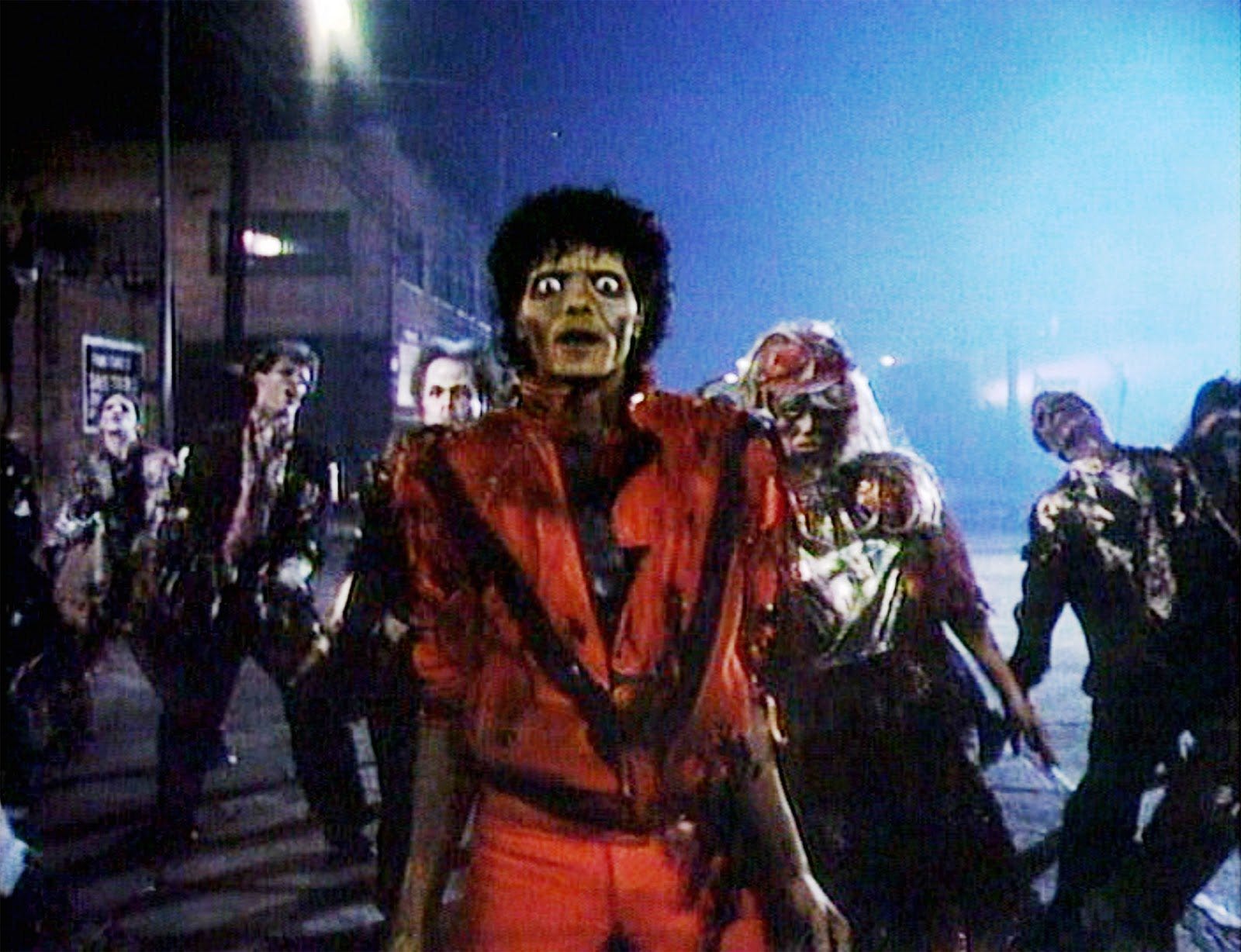
Third, with countervailing motion. A paradigm shift is underway, and it is quickening. The reductionist-materialist worldview, in which the stuff of the world is fundamentally material stuff (‘matter’) and anything non-material (eg consciousness, soul, spirit) can ultimately be reduced to the workings of matter (eg neurons) and the abracadabra of emergence, still informs the mainstream conception of normal life. And I know it is not clear what matter actually is, and that there is no ‘mainstream’ now, and most people don’t think at this level of abstraction, so I have to reach for eighties pop songs to make this point. I still believe it’s true, as Madonna sang, that we are living in a material world both philosophically and politically, at least in what remains of the liberal West. That materialist view has long been dying, however, and now functions as an undead assumption that shapes our lives, a zombie, where Madonna’s Material World meets Michael Jackson’s Thriller.
There is more to say here, but I prefer not to linger in critique. What is exciting is that the idea that the universe winks at us, or that the world speaks to us, no longer seems absurd, but is beginning to feel more like the experiential confirmation of a coherent intellectual view, a hermeneutic Q.E.D. From within that re(emerging) worldview, consciousness is not a lucky accident, value is not just a social convention, our sense of the sacred is not just a confidence trick, and the universe may, after all, be up to something. Such views no longer entail intellectual defeat. In fact, they now feel more like intellectual convalescence, the direction of a healthier society, because they increasingly chime with insight into the fabric of reality and help explain how we lost our way.
**
I felt called to explore this terrain in response to Chris Harding asking me to say more about the following statement from within my post Put the Mind in the Heart where I said that Cynthia Bourgeault’s cosmology helped in
…normalising those moments where it feels like the universe is winking at me and I have to figure out how best to wink back.
So you have Chris to thank, or blame, for the next few posts, where I will try to piece together why the universe could, in a manner of speaking, be winking at us, inspired by a statement by Schelling:
First and foremost, any explanation should do justice to what is to be explained, not devalue it, explain it ‘away’, diminish it or mutilate it, simply so as to make it easier to grasp. The question is not ‘what view must we adopt so as to explain the appearances in a way that accords neatly with some philosophy?’, but precisely the opposite: ‘what philosophy do we need if we are to measure up to our object, and be on a par with it?’ It is not how the phenomenon must be turned, twisted, skewed or stunted, if need be, so as to be explicable according to principles which we have already resolved never to go beyond. The question is ‘in what way must we broaden our thinking so as to get a hold on the phenomenon?’
- Schelling, “Seventh Lecture” 1856 (quoted in The Matter with Things by Iain McGilchrist, volume two, p1205)
I asked myself what this breadth might look like, and, in flaneur style, I came up with the following ingredients that somehow need to be marinated and baked in the oven for fifty minutes. All these elements may be considered ‘metaphysics’, but they are different flavours and textures, from varied origins. I have placed them in an order that currently flows in my mind, rather than prioritising or ranking them by importance, and the elements and order of the list might well change.
Cosmogony: Magic (Federico Campagna) and Resonance (Rosa)
Phenomenology: Cosmological Panpsychism (Freya Matthews)
Epistemology: Truth as disclosure or unconcealing (Alethia; Heidegger, Gadamer)
Poetry: ‘Contact’ (Hinton), ‘The conversational nature of reality’ (Whyte)
Depth Psychology: the idea of synchronicity (Jung, Pauli, Hilman)
Cosmology: The reality of the imaginal realm (Henry Corbin)
Temporics: The presence of chiastic time (Cynthia Bourgeault)
Anthropology: Sacred phenomena as symbolic structure (Mary Douglas)
Axiology: Value as directly perceptible (Scheler, Stein/Gafni)
Archaeology: Magic, Mythic, Mental and Integral Consciousness (Gebser)
Narratology: Story as the perennial grammar of value (Gospel of John)
Theology: Panentheism (Keller, Sheldrake, McGilchrist, Whitehead, Hartshorne)
That’s enough for now. And there is clearly too much on that list for one additional post, so I am not sure how it will play out, but based on what I have drafted already, I suspect I will post thoughts on points 1-4, 5-7, 8-11, and then summarise with 12, so this is likely to be the first of five posts. To end the theme we began with, of the world speaking to us, I leave you with an extract from David Whyte’s poem, Everything is Waiting for You:
To feel abandoned is to deny
the intimacy of your surroundings. Surely,
even you, at times, have felt the grand array;
the swelling presence, and the chorus, crowding
out your solo voice. You must note
the way the soap dish enables you,
or the window latch grants you freedom.
Alertness is the hidden discipline of familiarity.
The stairs are your mentor of things
to come, the doors have always been there
to frighten you and invite you,
and the tiny speaker in the phone
is your dream-ladder to divinity.
Put down the weight of your aloneness and ease into the
conversation...
**
My synchronicity moment happened one day when I decided out of the blue to make a heartfelt offering to nature, so I took a small bag of herbs down to a stream and with sincere prayers I made my little offering to the stream. As I released the contents into the stream, I looked down and there was a gold ring.
Re-attuning to the right hemisphere's functions with the last few hundred years of scientific exploration in the mix -- it won't be the same trip as the ancient writers of the Vedas were on -- let's hope enough of us can catch the air currents and ride them as we spiral onwards